

Breaking through brick walls, finding family clues hidden in plain sight
There are many ways to break through the walls to find information about your ancestors. Like a good editor, I enjoy the detective work in genealogy, because that's what leads to discoveries.
There are many ways to break through the walls to find information about your ancestors. These are the ones I use most often:
1. Most breakthroughs came from tracing the women, as the male lines are pretty well documented because of the way our culture follows the male lines of family names. From a research perspective, every female is someone’s mother, sister, wife, or daughter (and every male is someone’s father, brother, husband, and son).
The women in my extended family line were strong, outspoken, smart, and clever like a fox. My great-grandfather’s genealogy includes the histories of all our great American family members. The women’s families were just as prominent as the men’s. I realized immediately the elegance of what he had done.
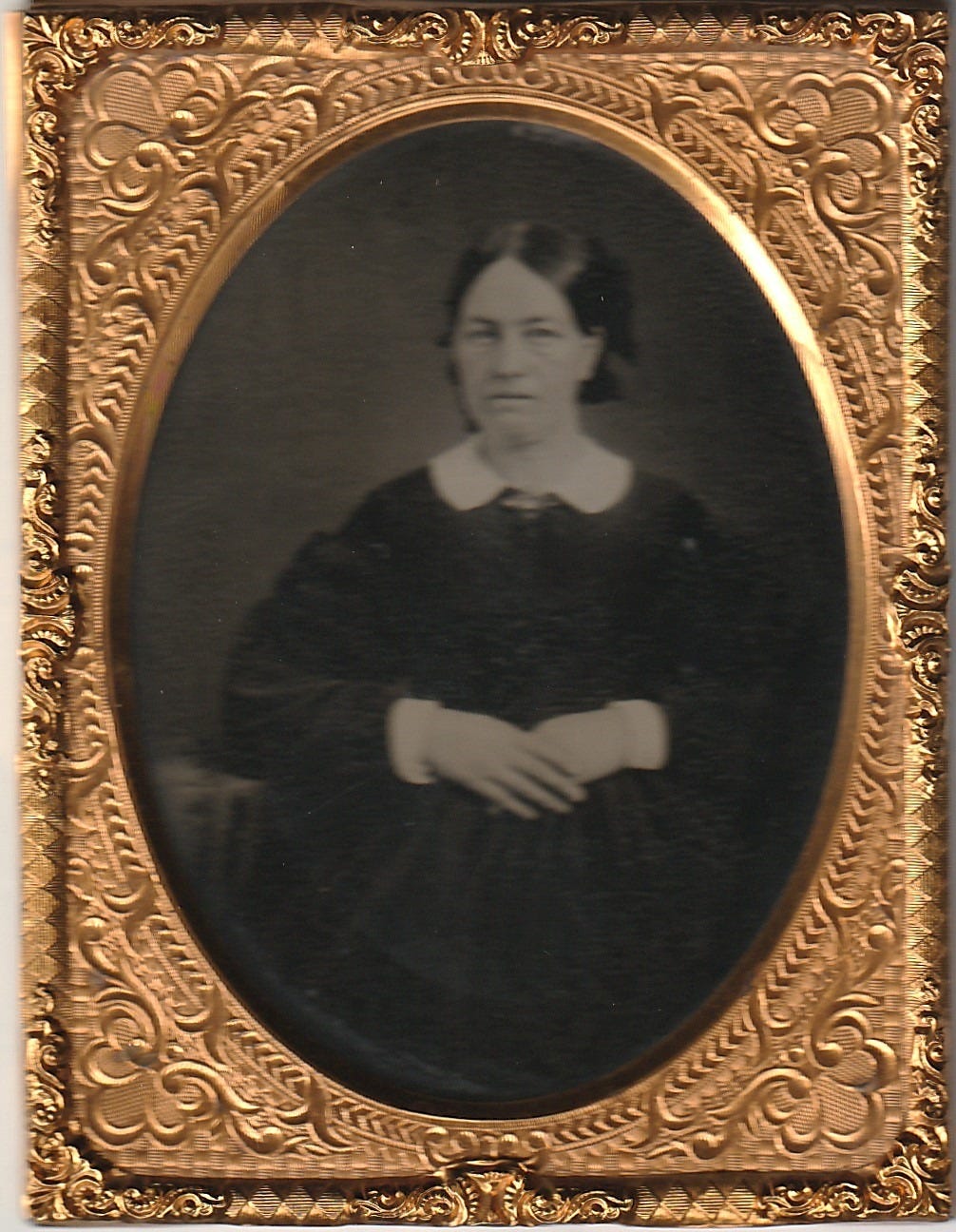
It makes researching census and church records more strategic: You are questioning everything, as it could be a clue in your quest for information about the people you are researching. There was plenty of work to be done either way gathering the facts of their lives, where they lived, and the times in which they lived.
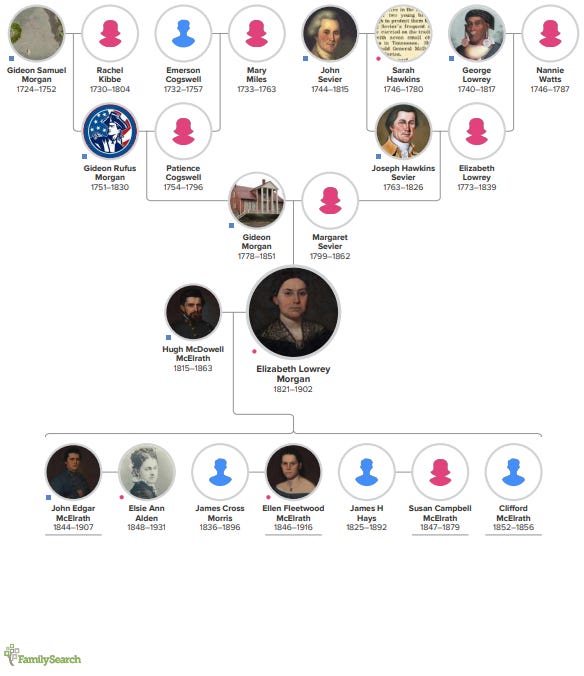
2. Build entire families rather than just direct ancestors. Using this strategy I discovered those ancestors who were the storytellers and keepers of records. I’ve known many people who struggled trying to track down just the two parents, working from present to past.
As I review family records and stories, I understand that not every ancestor is a family historian or genealogy guru (although now it is easier than ever). As you study the entire family tree, though, you might just discover who it is, by building out the entire family. Using this technique helped me find the people from the past who had this information. My grandfather’s sister, for example, was the family historian. Her father had passed it down to us.
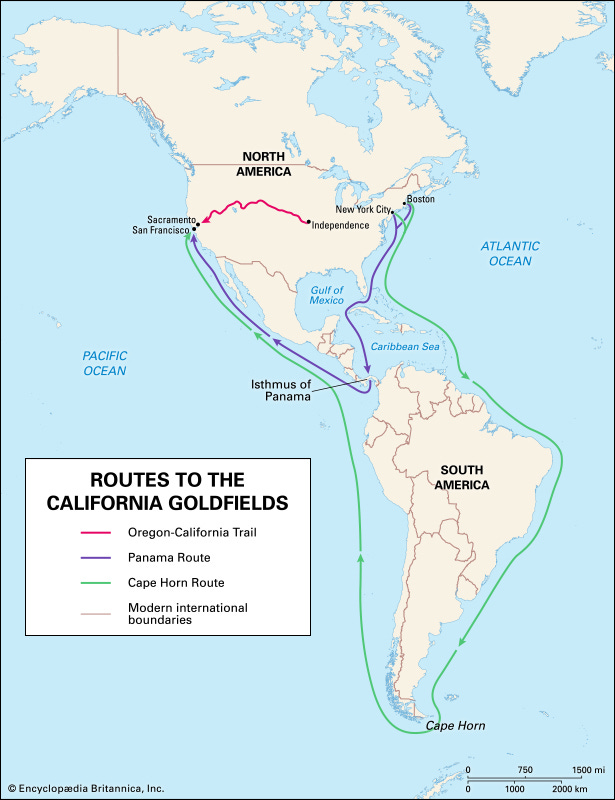
3. Know your geography and history. Spelling of names wasn’t as precise back then as it is now. You might find census takers who recorded names phonetically, or the way it sounded to them—a real problem if you didn’t understand a local dialect.
If you run across two records with similar names, however, and one was born in Massachusetts and the other in Tennessee, and other records show a parent or that person living in Tennessee, then you should go with the birth record for the person who lived in Tennessee. I just spotted one of these today.
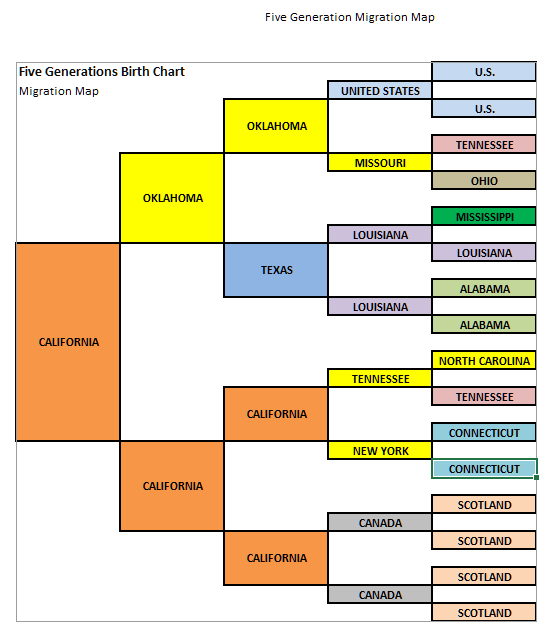
People moved in somewhat predictable ways to the south and west, or they followed their husbands or wives or work, or were ejected from their lands as the Cherokee were. History tells us where they landed. Often, ancestors were part of great migrations, and for all sorts of reasons. Creating a migration map of your ancestors’ places of birth and death over several generations can reveal their journey.
Trust your gut if it doesn’t add up! Put your BS (Bad Statements) Detector on high alert. I developed mine as a journalist. Challenge people and sources. Use a search engine to pose challenges to questions you have. Make a migration map of where your ancestors were born and died. You will see the pattern and can evaluate your sources from that perspective. Errors are only now being corrected as we have more data to examine online. I’ve spent hours correcting other people’s mistakes on familysearch.org, consulting records, relationships, and stories. Out of all that work, stories emerge. Family history gold!
4. Sometimes family names are hiding in plain sight. They are clues. Follow them. For example, in Western societies, it is common to give a son or daughter a the middle name of an ancestor. It’s a clue. That’s how I discovered my wife’s Mayflower ancestor. The same strategy was deployed by family for generations. If you see the name Priscilla in a family line, it may lead to a Mayflower ancestor. It’s a clue.
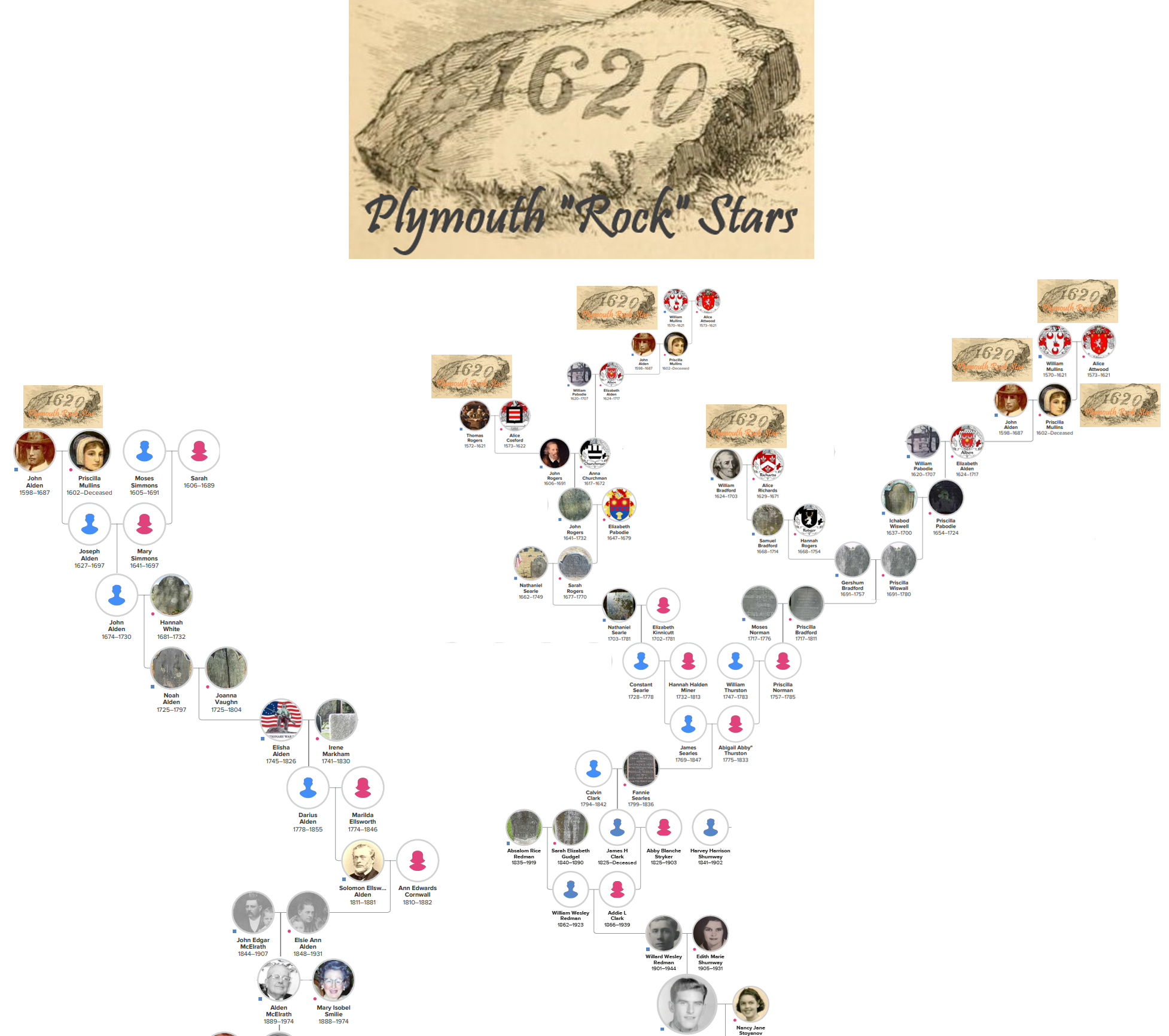
When my spouse found her father’s birth parents, as I scanned the ancestors I picked up on references to Mayflower names. My line was Alden up to my great-grandfather, but my partner’s Alden line consists almost entirely of women with first or middle names that were clues.
(Yes, we’re cousins! She is my 8th cousin twice removed. According to DNA research, every human now living is related to the same mitochondrial Adam and Eve.)
5. Sometimes you have to do a little sorting. The further back you go, the more common it is for people to have two or three spouses. There were children to raise, food to be grown, cows to be milked, harvest, canning, building homes, horses to be trained, wagons to be built. Especially with married women, first names are the best clue, as their last names change over time. Here’s an example:
In Susan Hopkins Bailiff’s case, she first married Henry H. Young, and is listed in the census as Susan H. Young.
After he died, leaving her with three children, she immediately married Calvin Nance Melton who had two older children and, in addition to her three children, they had seven more children and her name changed to Susana H. Melton.
When she died, Calvin Nance Melton had his hands full (the children were 1, 4, 6, 8,11, 13, and 15) for four years before he married Elizabeth Scott, his third wife — two Elizabeth Meltons. (He and Elizabeth also raised Minnie’s child Calvin Nance Melton, aka Calvin Guy Wilkins, when she married Earnest W. Welborn.)
In case you were wondering, Calvin met his first wife Francis Elizabeth Johnson, and they had two children, Sarah A. Melton and Isaac Foster Melton (could it be a hint?), whom he also cared for, according to census records. After the Civil War the yours/mine/ours family moved from Alabama to Missouri, Texas, and eventually Oklahoma.
See how I made a story out of a few facts?
6. The closer the date of a document is to the living person, generally the more accurate it is. Some people on group trees such as wikitree.com or familysearch.com will undo generations of record-keeping because there is no “hard evidence,” especially difficult to come by in an oral culture such as Cherokees.
7. Sometimes what you learn gives rise to intriguing questions. Searching for answers sometimes reveals surprising insights and answers. Why did some of the natives of New England side with England and not the settlers? Why did some of the Cherokees fight for the South and not the North? Why did other Cherokees own slaves? Why did some of our early ancestors who fought the natives, then intermarry? This is a good sign, when you start to ask questions like this.
8. Discover the tangible relics of your ancestors for clues to their stories—the bibles, trophies, plaques, books, medals, rings, diplomas, certificates, heirlooms, anything you can get your hands on. Then research them.
I inherited my grandfather’s racing trophy, listened to his stories and my mom’s stories, then found articles about my grandfather’s early days of racing cars in the California Digital Newspapers Collection. He eventually became one of the first car salesmen, and then one of the first used-car salesmen, before managing his parents’ estate and working his way up the Oakland Juvenile Detention center. He was a social media star of his day in the local papers.
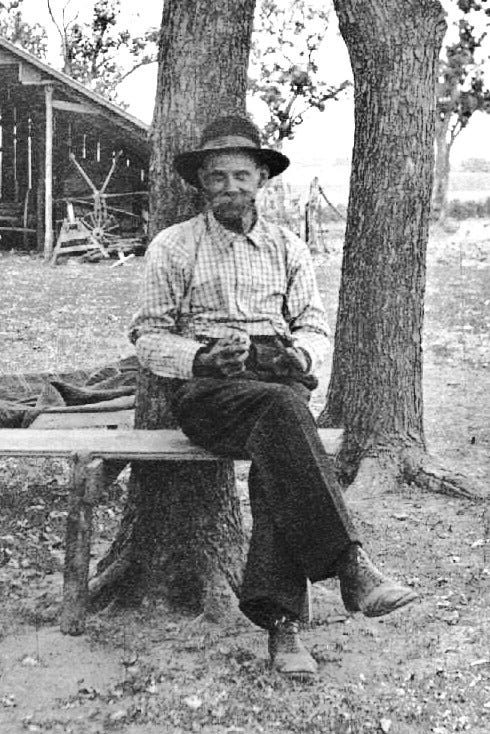
9. To break through a brick wall, it took me 20 years to be sure that my original research about my paternal grandfather obtained through census records was correct. A DNA test connected me to second a cousin who was also looking for information, and provided facts and stories that proved it. She told me his nickname was “Guy” which was my grandfather’s original middle name. Well, she actually shared more than that in a note, confirming everything my research had uncovered:
“Guy Wilkins died when my grandmother was only 18 months old...Dec. 26 1917. My Great Grandmother, Myrtle Letha Wilson, moved back to Oklahoma. Myrtle was raised by her grandparents, She went by their surname, Wilson. I only knew Stillman by the name “Guy” until after my grandmother’s death and I started searching for information about him because I never heard anything other than they were in Kansas. My mother told me that Grandma Ford corresponded with some of her half sisters. But the letters that she saved were somehow lost after my Grandpa Ford married again and moved from the home he had built with my grandma. I have searched and, hopefully, have traced Guy’s family back to Wales. I really don’t know much more about him. Bray Wilkins, 1610-1702, was quite a notable character. I am pretty sure he was our first Wilkins in the United States. Landing in Massachusetts in 1630’s.” —ggranddaughter Lorene Wilkins
I looked at maps and discovered that despite the fact they lived in different states, they were only about 30 miles away. Create timelines, migration maps, network with other familysearch.org researchers on your family tree lines and talk or write about what you know. That’s how I not only discovered a DNA ancestor but how I became sure of my grandfather Melton’s birth name and father.
10. Do the deep dive into history—Sometimes the detailed information is in history books, and sometimes it is new or reframed more accurately. Let’s look at the Mayflower passengers, who are often discussed as a group to focus on their common experiences.
Here are the narrative facts:
The Pilgrims were the original refugees to America. They were the first immigrants to come to America fleeing persecution—and their spirit of gratitude is an obligation that has extended throughout the generations.
People tend to group all the passengers on the Mayflower as one group, when in fact there were four groups: The Separatists seeking religious freedom, the Non-Separatist families and individuals recruited by London merchants who expected to land close to Boston before the ship was blown off-course, Indentured Servants, and Contracted Mayflower Sailors who agreed to stay a year in New Plymouth. This was confirmed at Plimoth Plantation when we visited last September with cousins.
I like the way familysearch.org breaks it down and offers a detailed discussion of each group on their Mayflower blog page: https://www.familysearch.org/en/blog/mayflower-passenger-list
Then there is a poster I like which shows the risk the passengers were willing to take, especially those who wanted to escape religious persecution. This chart represents the people who were on the Mayflower, and how many of them from all four groups survived a year later:
https://i0.wp.com/behindeveryday.com/wp-content/uploads/2018/11/mayflower-passengers.jpg
It’s also perplexing how the Mayflower group received all the attention, since there were already colonies established, except for one detail: They were refugees. It’s a continuous thread that weaves itself into the American experience.
https://www.thedailybeast.com/the-pilgrims-were-the-original-refugees
Our ancestors John Alden and Priscilla Mullins were therefore not one of the 35 Separatists aboard the Mayflower. He was a cooper, no known family that’s ever been discovered in England, and she was the daughter of a businessman who sold shoes. John stayed, even though he could have sailed back to England. He was young, and likely had his eye on a young woman.
Of the eligible men, all of whom were several decades older than John, who survived that first winter, Priscilla—one of only four women who survived the first winter —chose John Alden, the crew’s hunky barrel maker, and married him. They had 10 children and quickly moved out of Plymouth to Duxbury to start their own farm on better soil.
And until three generations ago, it was pretty easy to follow that line because the last name of the men was still Alden. My wife’s John and Priscilla line took a little more sleuthing to uncover.
These techniques helped discover my family who are direct ancestors of multiple historical American figures:
Tennessee’s first governor and Indian fighter John Sevier, and his son’s Cherokee wife Elizabeth Lowry.
New England preachers, including 8X great-grandfather Timothy Edwards, the father of Jonathan “Sins In The Hands of An Angry God” Edwards and brother to my 7x great-grandmother—a reading which I taught in my high school American Literature class. (The textbook author failed to interpret this famous speech correctly.)
According to an excellent biography by Jeffrey Waddington: “Truth be told, Edwards preached just as much, if not more frequently, on the anticipated joys of heaven as he did the fears of hell. Edwards did not preach such somber sermons merely to scare his hearers, but to warn them of the very real dangers facing them and calling them to flee to Christ.”
The real discoveries are made on the female lines of the family—and help build out the entire families—which at the very least connect you to tens of thousands of other cousins like mine, standing at 57,164 the last time I checked, at the annual familysearch.org RootsTech 2026 genealogy convention!
Sign in to Rootstech today and choose a live or video recording of a session that will help you up your game. If you register, you can spend the next few months studying them.
See you at RootsTech 2026! Say hi in Chat!
Rob Melton
16 March 2026
www.archives.gov/riverside/how-to-begin-genealogical-research The best kind of research is based on hard facts, collected close to the date of key life events — census records, birth, marriage, children, death, military records, libraries and archives, their own writings, family bibles — and are considered the most accurate.
www.archives.gov/research/census
www.familysearch.org Excellent place to start your family history research. It’s free, and many people volunteer their time to make it a better, more accurate tree. Sometimes, though, there are mistakes you may have to correct.
www.ancestry.com Once you get started, you may want to build your own tree on Ancestry. The downside is that it will cost you a lot of money, and once you stop paying you will lose access to all your work. Better to copy sources over at familysearch.org. If you make a mistake, you may not discover it unless you share your tree with others. When you share your tree, mistakes are perpetuated every time someone copies your information into their tree. Yes, you’ll find my tree on Ancestry, but I’ve been busy verifying the facts and learning how to rationally make those difficult calls. Bottom line: If you don’t know, don’t make it up!
Other genealogy sites and Substacks I follow:



WikiTree: The Free Family Tree
Oh wow, I instantly recognized great aunt Marion in the photo! Took me right back to my childhood and Christmas Eve parties at Grandma and Grandpa Mac’s. 🩷
Well I have more photos I took to show you then! 😁